Bitcoin, AI, and Data Center Noise Mitigation.
High-Density Computing & Data Center Noise
As the digital landscape evolves, the physical footprint of technology is becoming louder. High-density computing—ranging from Bitcoin mining operations to AI-driven data centers—presents unique acoustic challenges. Unlike traditional industrial noise, these facilities produce high-frequency, constant-tonality sounds that can travel long distances and penetrate residential structures, leading to significant community friction and regulatory hurdles.
Design of Cryptocurrency Mining Facilities
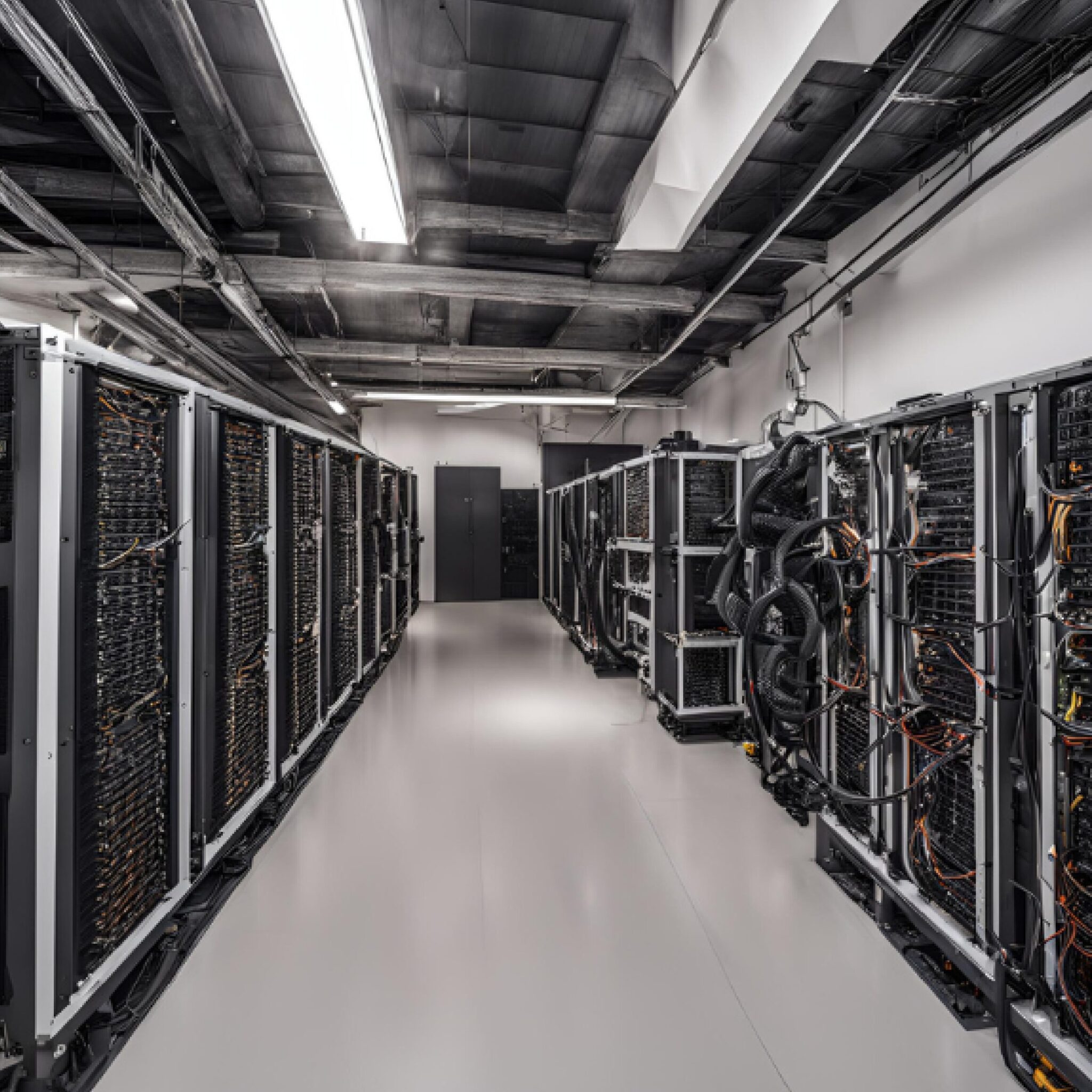
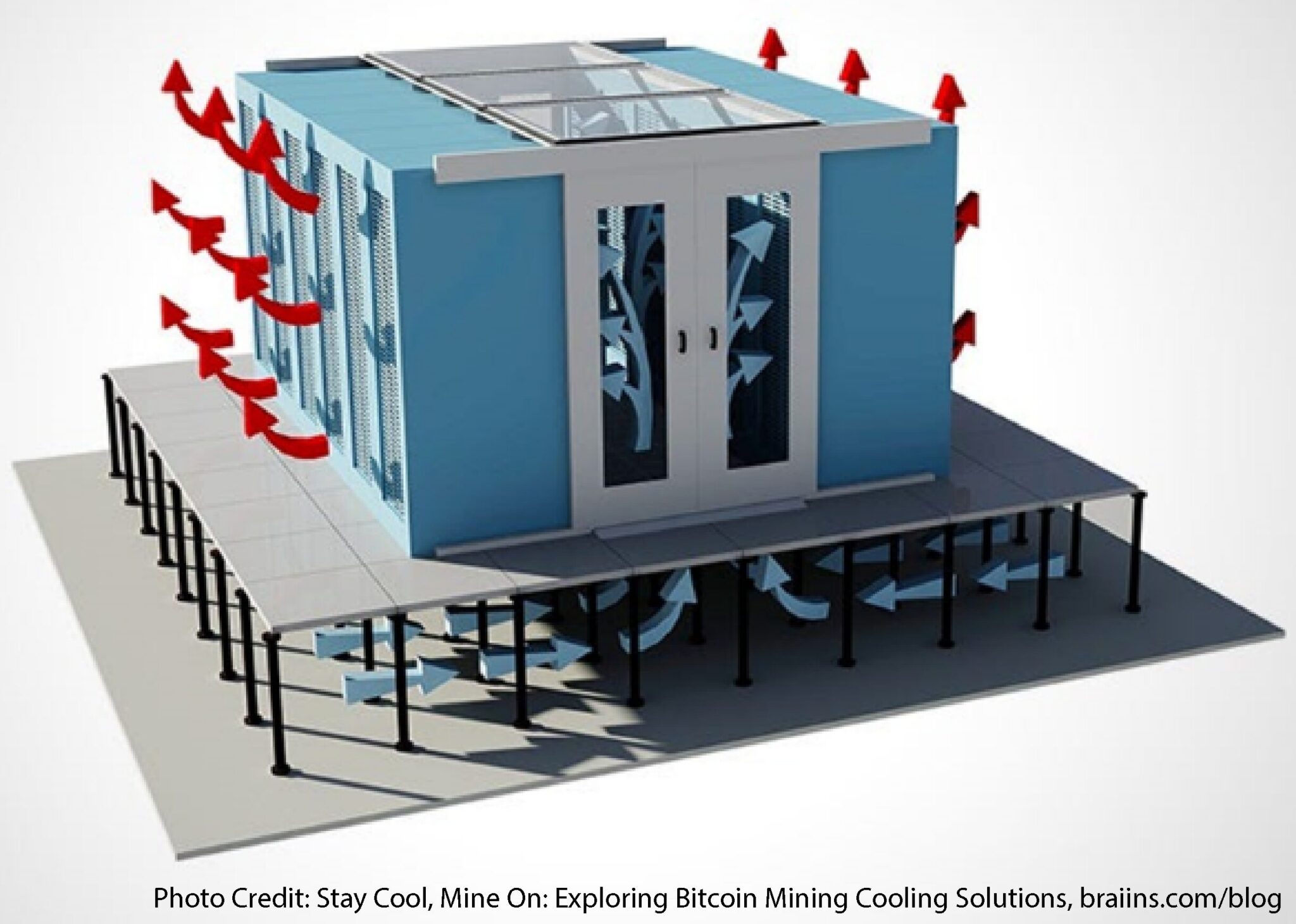
A Bitcoin or other Crypto Mining Farm can have various designs. Some will house their equipment in a large building or warehouse. Others will house their equipment within numerous individual containers similar to a box truck in size. But as far as noise goes it nearly always comes down to the cooling systems.
“Bitcoin mining generates a significant amount of heat due to the intensive computational processes involved. Efficient cooling systems are essential to maintain optimal operating conditions for mining hardware.”
Nico Smid, the Founder of Digital Mining Solutions and author of “The Bitcoin Mining Block Post”
Accurate Noise Surveys of Data Facilities
Equipment Requirements and Calibration
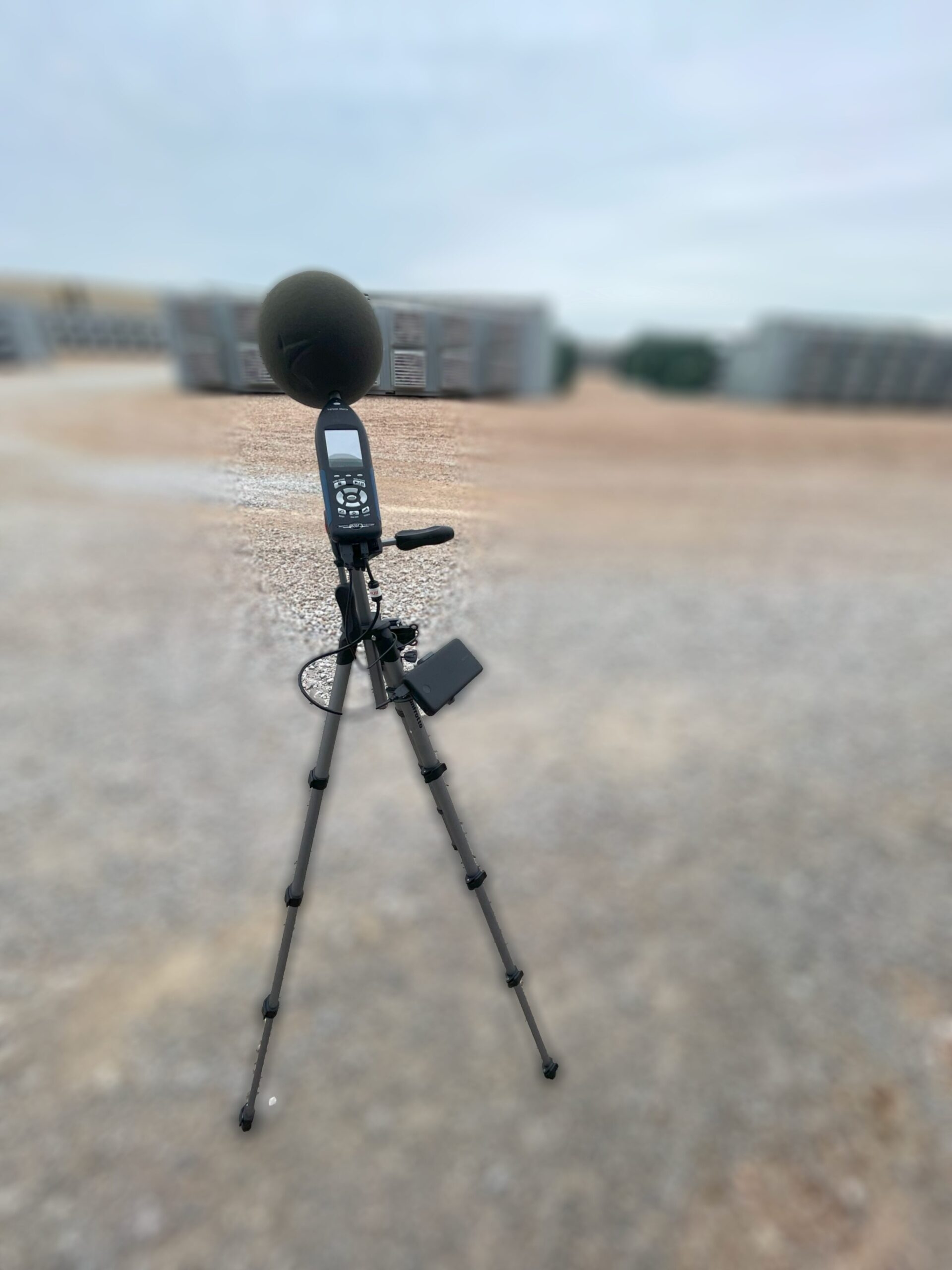
To perform an accurate noise survey, selecting the appropriate equipment, such as a noise meter or system, is the initial step. Noise monitoring equipment is classified by the American National Standards Institute (ANSI) as either Type I (laboratory grade) or Type II (general purpose). Type I offers higher accuracy than Type II, although both are potentially suitable for environmental noise surveys.
Proper Setup and Measurement Metrics
A standard setup involves positioning the microphone on a tripod at a height of five feet above the ground. It should be placed away from reflective surfaces like buildings, and a suitable windscreen must be attached to the microphone. Additionally, configuring the equipment to log the correct metrics is essential. The most significant setting for environmental noise is using A-weighted decibels (dBA) rather than flat-weighted (dB) decibels.
Utilizing Professional Expertise
With High-Density Computing & Data Center Noise , considering the technical requirements for accurate measurement and analysis, it is generally advisable to engage a qualified noise consultant. They possess the expertise to conduct the survey properly and can provide a comprehensive, easy-to-understand noise report based on the findings.
Noise Mitigation Options
Reducing noise levels to locations offsite is dependent on several factors. One is the type of cooling technology being used and another is the distance from the cooling noise sources to the receivers (i.e., residences). The most basic noise mitigation employed are noise barriers which can be noise walls, noise berms, or some combination. Noise barriers need to be close to the source to be effective and depending on the design of the barrier may only be effective up to 300 feet away.
Other options can be vent silencers and/or quieter blades for every fan. Mitigation for immersion cooling and hydro-cooling, have more pumps creating noise which are easier to mitigate with lagging. The best way to mitigate Bitcoin mining noise is to have laws in place based on known measurements and modeling to help locate these facilities in compatible locations.
Frequently Asked Questions
What types of cooling systems are available for Bitcoin, AI, and data center facilities, and how do they impact noise?
Data center cooling systems generally fall into three categories, each with distinct acoustic profiles:
- Air Cooling
Uses high-velocity fans with open atmospheric intakes and exhausts. This is typically the loudest of the cooling options, requiring comprehensive architectural or barrier noise mitigation. - Immersion Cooling (Single-Phase & Double-Phase)
Hardware is submerged in a specialized dielectric liquid (circulated through a heat exchanger in single-phase or condensing vapor in double-phase). These systems are significantly more efficient than air cooling, and their primary noise sources—mechanical pumps—are much easier to enclose and mitigate.- Supermicro’s next-generation DLC-2 direct liquid-cooling solution significantly cuts data center power, water, noise, and space, leading to substantial cost savings and improved efficiency. Discover how this innovative technology can revolutionize your data center operations and reduce your environmental impact; click here to learn more.
- Hydro Cooling
Utilizes water flowing through pipes directly connected to the hardware, pumped to an external heat exchanger. Like immersion, the primary noise sources are pumps rather than high-volume fans, allowing for more streamlined acoustic dampening.
What is the difference between LDN and Leq noise metrics?
The short answer is that LDN is the Day-Night noise level over the period of 24 hours with a +10 dBA penalty during the nighttime hours. This is used for some local regulations as well as the US Department of Housing and Urban Development (HUD) to determine if a residential development would be suitable. The Leq is the equivalent noise level which requires that a duration of time be associated with it such a 1 second, 10 seconds, 1 hour, etc. Some will say it is a average noise level but technically it is the energy average over that period of time.
How do you measure and mitigate noise for high-density data centers and crypto mining operations?
High-density computing facilities require rigorous environmental sound modeling using software like SoundPLAN. We establish baseline ambient sound levels at property lines, evaluate equipment layouts (such as exhaust fan orientations or pump banks), and design custom engineering controls—including acoustic louvers, barrier walls, and silencers—to ensure local noise ordinance compliance.

Full Member of the Acoustical Society of America

Full Member of the Institute of Noise Control Engineering